Personal Essay
Thanks in Advance
Notes from a men’s group on gratitude, trust and who goes first.
This week's men's group call fell right before Thanksgiving, and Frank Menard, who leads the group, opened with a question that sounds simple until you try to answer it: what's the difference between being thankful and living with gratitude?
Albert answered quickly. You can be thankful for receiving five dollars, he said, but once you've received it, you're done. Gratitude is something you live with for a much longer stretch of time. Luis pointed out that our brains have spent millions of years scanning for what's wrong, what's missing and what can hurt us, so we're always looking at what we don't have instead of what we do. His word for the fix was awareness.
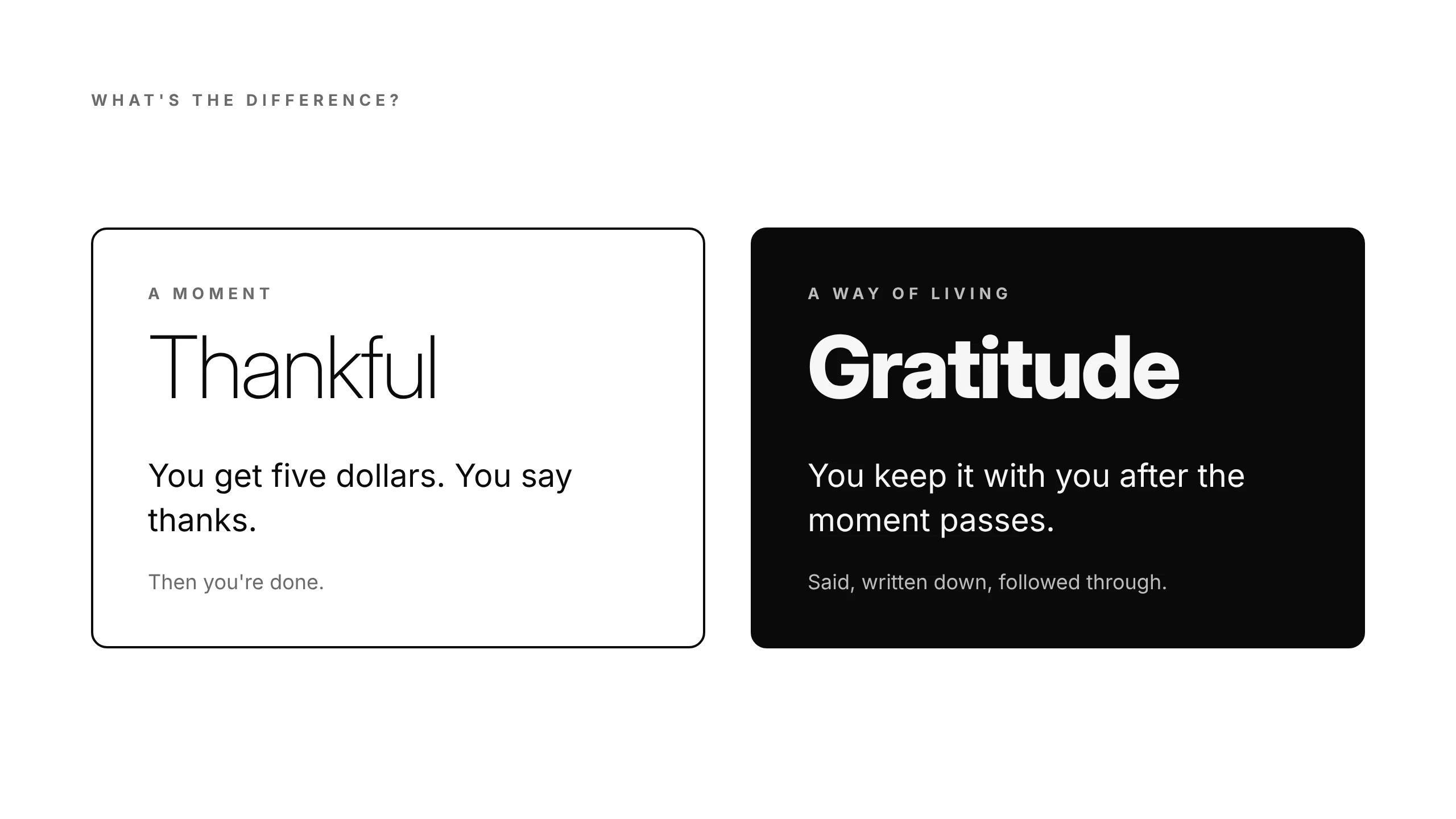
Rob compared it to the difference between motivation and real hunger. A song can motivate you for a few minutes, but gratitude is something you have to turn on inside yourself and keep on, and it takes discipline to stay in that headspace even when things are hard. Frank added one word of his own: intentional. We say a lot of things, he said, and we rarely follow them with action. Living with gratitude intentionally means you say it, write it down and then follow through.
Who goes first?
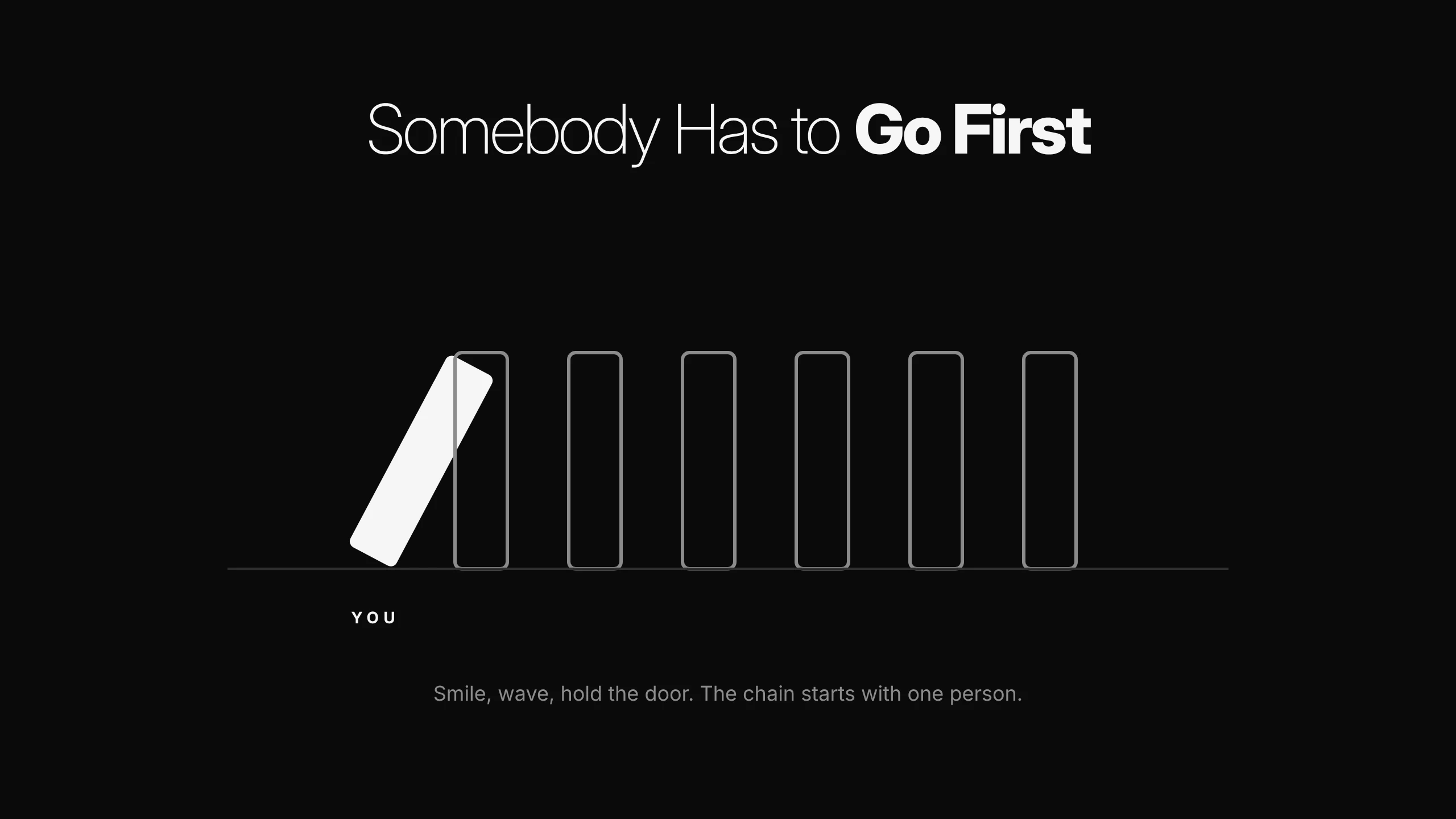
Frank spent years in a business referral network whose motto was "givers gain." You give, give and give before you gain anything, and if you focus on the gain more than the giving, you won't get anything at all.
He practices it on his morning walks. He looks people in the eye, smiles and waves. They smile and wave back. They didn't smile first. He did, and then it came back to him.
He's right. But the one thing I wondered was, if that's the case, who starts the chain? There almost needs to be an alchemist in the world. At some point, somebody probably punched you in the face, Frank, and you decided you weren't going to punch them back. You were going to wave.
For the record, Frank says he's never been punched for waving at anyone. But he answered with a story about a bartender. He and his wife were waiting about 45 minutes for a table with another couple, and the bartender was obviously having a really bad day. So he kept being friendly with her until she smiled. When a table opened in the bar area, she offered it to them and took great care of them. On the way out, she stopped her conversation to thank him, and he gave her a hug.
Luis called it breaking the pattern. Sometimes somebody has to take the lead. You need the pattern interrupt, and Frank said he wants to be the guy who goes first. Hold the door, whether it's a man or a woman coming through.
Rob had just tried it. On a weekend trip to Oklahoma to pick up his truck, he made it his own small project to go out of his way to be friendly, crack jokes and start conversations in the airport and in every town he passed through. He called it being an ambassador for what we talk about in the group.
Hands before eyes
I'll admit, the eye-contact part is something I struggle with. I'm claustrophobic and hyper-aware in close quarters. When I meet somebody new that I don't trust yet and I go to shake their hand, I'm looking at their hand, not their eyes, because if I can't see their hands, I don't know what they're doing with them.
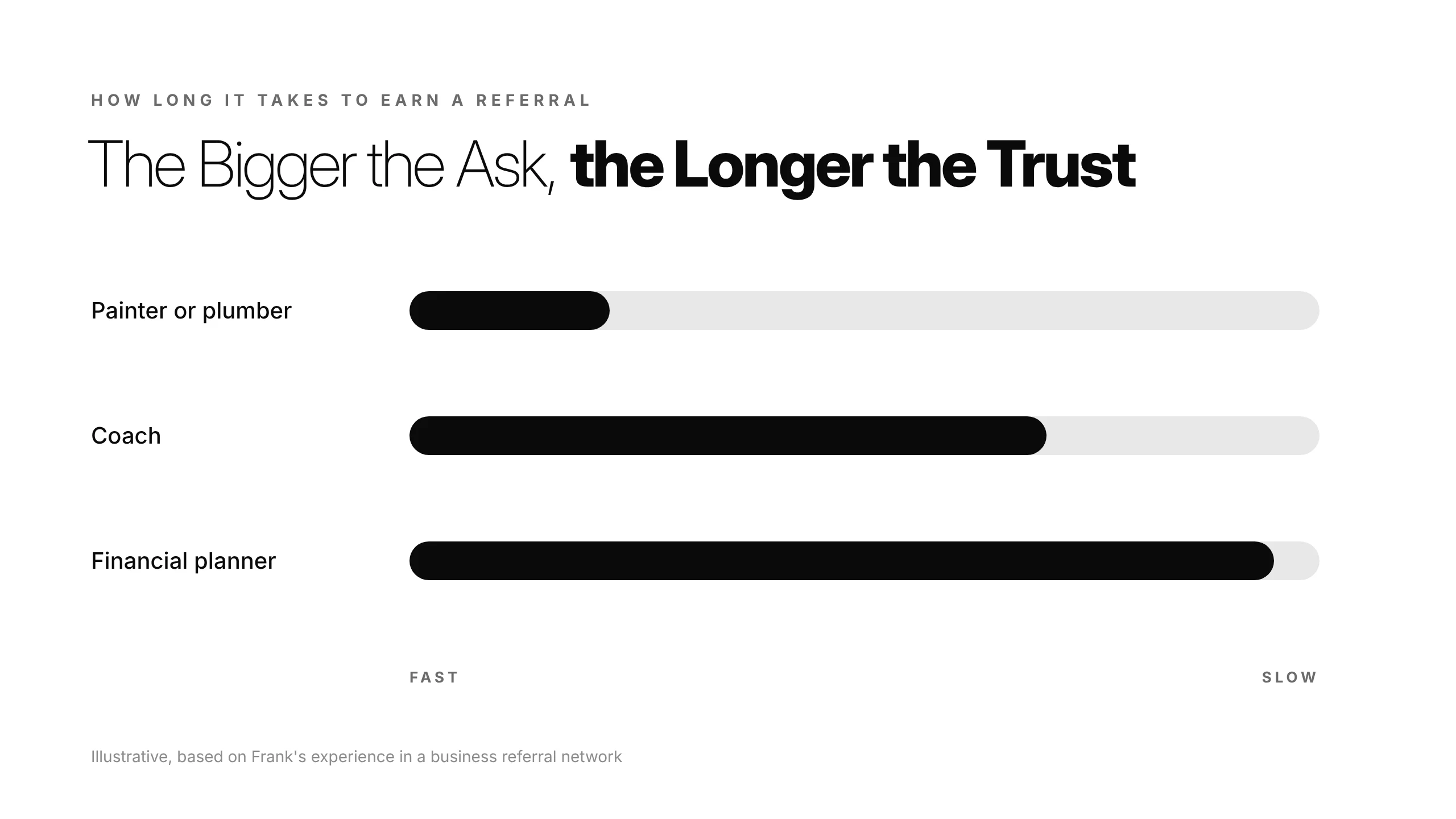
Trust takes time, and Frank said it comes before almost anything else. In his referral network, the painters and plumbers got referrals fast. As a coach, it took him forever, because people had to trust him first. Financial planners have it even harder.
On that point, there's a really good book I recommend called The Credibility Method by Mike Metzger, whom I met in Miami. It gives the simplest instructions I've seen for building trust and credibility online. I've followed them, and it works extremely well.
Show me where yours is
Luis pushed the trust point further. Trust matters, he said, but if you don't have results, people won't buy from you. You can't teach someone to do something you haven't done yourself.
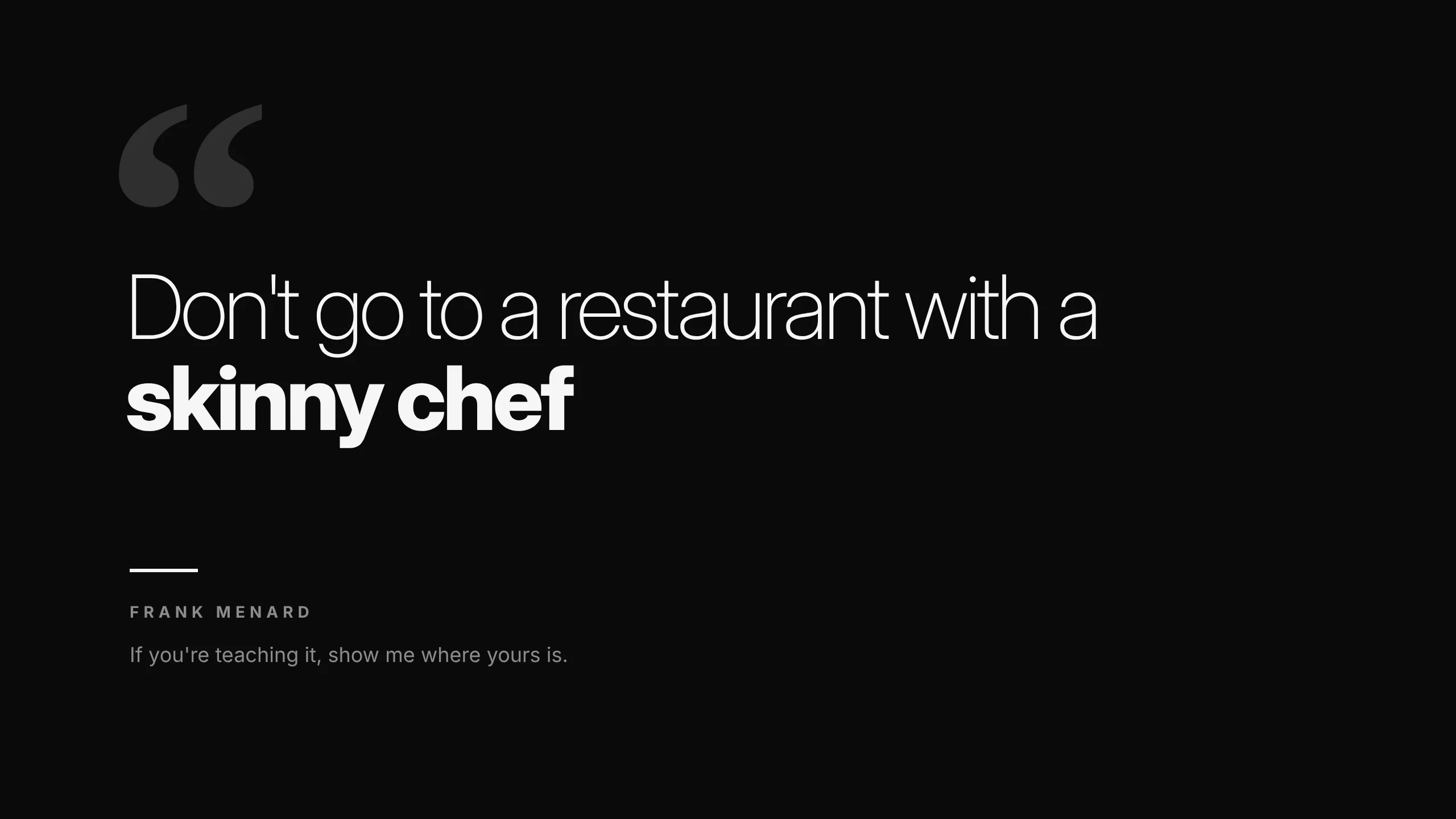
So I asked a question. Say somebody had a six-pack before but doesn't have one now. Could they teach you how to get one? Frank and Luis both said yes, they could, but the first thing Frank would ask is where yours went. As he put it, don't go to a restaurant with a skinny chef.
What struck me is that by that standard, almost every college professor and teacher we've ever had fits the description of someone who has never done it, and that's our education system in the United States. Luis put it best: imagine paying thousands of dollars to learn business from someone who has never owned one.
The only exception I could think of is the messenger. If I know someone who knows how to get a six-pack, and he doesn't have time to talk to you, I can pass along what he told me. You can take it or leave it.
Be honest about what you want
Later in the call, Frank walked through Tony Robbins' RPM: the result you want, the purpose behind it and massive action, which means everything you've got.
I think people also have to be honest about what they actually want. In the world we live in, we let other people tell us what we're capable of. Share a big goal with the wrong person and you'll hear, "You're crazy if you think that's your goal." But if you're honest with yourself, you'll usually find you can achieve a lot more than you think.
Frank shared his own why. When his kids were in second grade, he promised them that if they chose college, they would graduate debt-free. Both chose college, and both were there at the same time, right in the middle of the 2006 to 2008 real estate crash, the business he was in. That promise forced him to adapt, and both of his kids graduated without debt. That's a blessing, and they should be thankful for it.
Aung added that once you're in the right state of mind, you can do almost anything, and when you're not, all you can see is what's impossible. Phil made a point I keep coming back to. Artificial intelligence is great at figuring out how to do something, but it doesn't have a why. Knowing why it matters and who you're serving is still the human part of the job.
Get it out of your head
Near the end, Frank mentioned a friend who couldn't sleep because his mind wouldn't shut off. Something I've found is that if I can't go to sleep, there's something in my brain I need to get out. Writing it down, or even recording a quick voice memo, gets it out of my head and into something else, and then I can sleep.
That's my small win this week, too. I've been working at a tiny desk, four feet wide and two feet deep, and I just got the wood for a ten-foot desk that my dad and I are building together. I'm a very visual person. If a task is printed out and sitting on my desk, I know I need to do it. If it's not, it's done.
The assignment
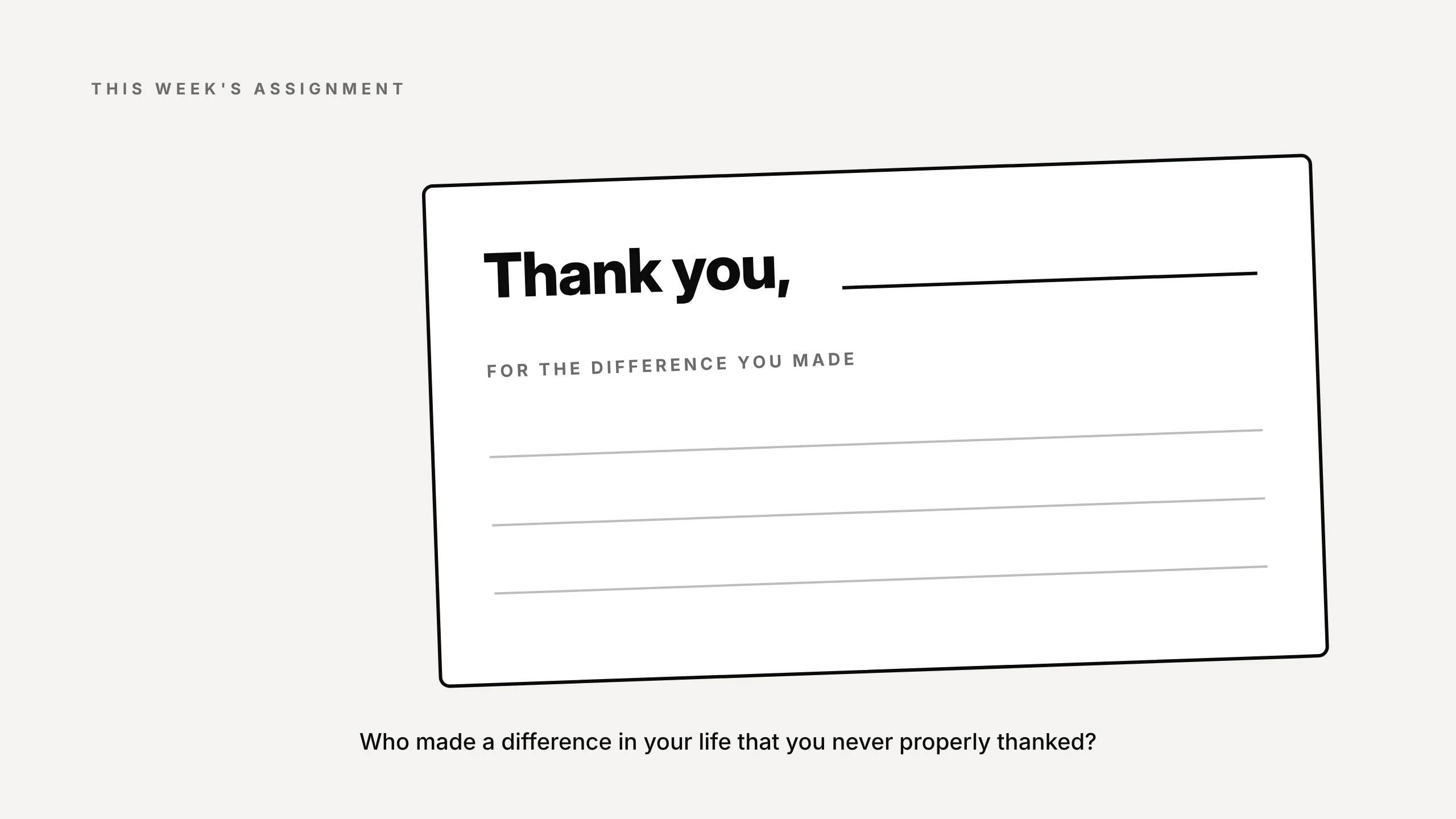
Frank closed with a challenge for Thanksgiving week, and I'm passing it along to you. Who has made a difference in your life that you've never properly thanked? It doesn't matter how long ago it was. Call that person or send them a message this week. If they're no longer with us, find your own way to thank them.
Somebody has to go first. It might as well be you.
If this conversation spoke to you
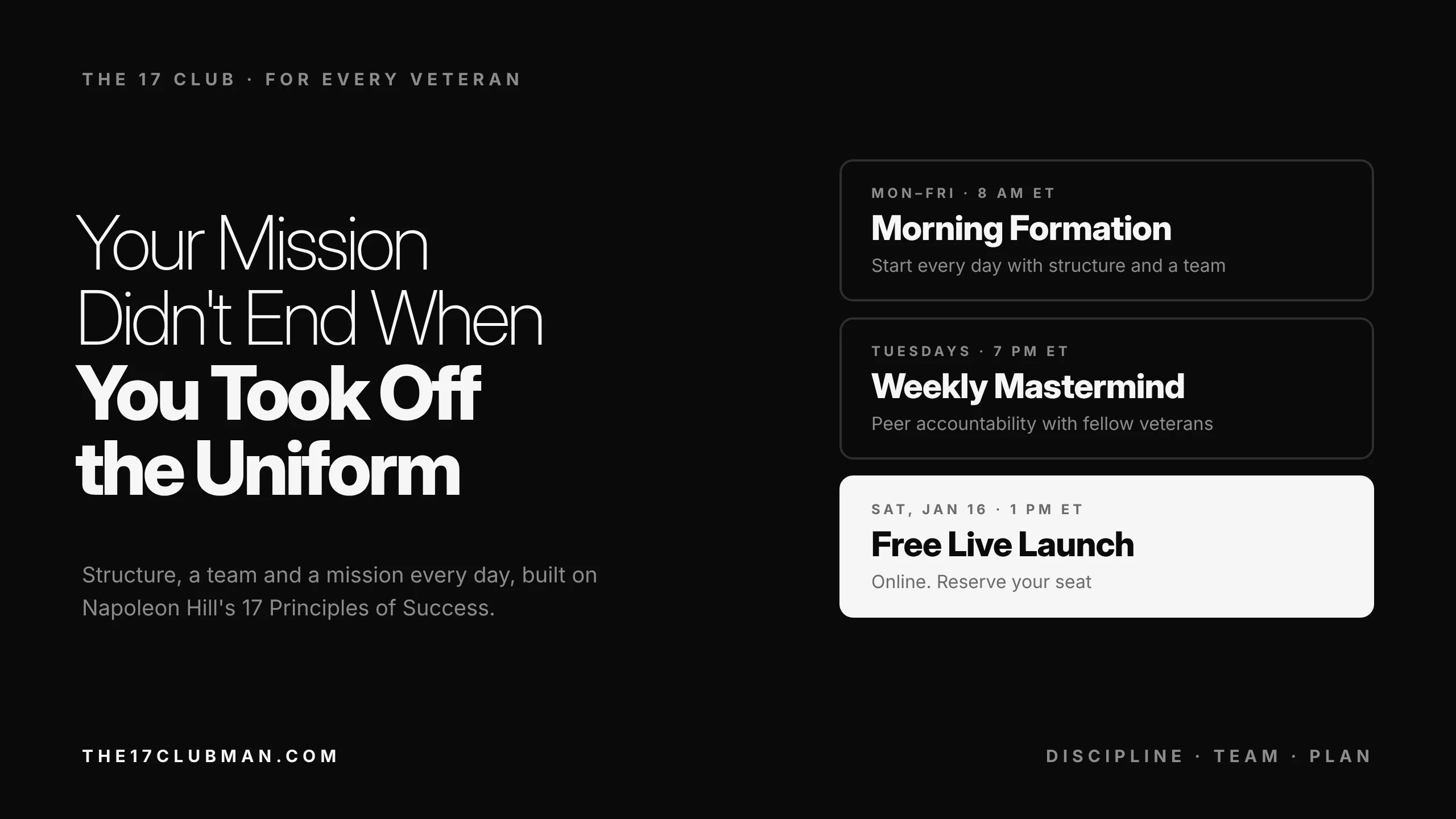
Everything in this article came from one hour with The 17 Club, a community started by retired Marine Master Sergeant Frank Menard to give veterans structure, a team and a mission every day. Frank is a certified instructor with the Napoleon Hill Foundation, and the group works through Hill's 17 principles of success together.
Veterans can join the Morning Formation, Monday through Friday at 8 AM Eastern on Zoom, or the Tuesday night Mastermind at 7 PM Eastern. If you want to see what it's about first, Frank is hosting a free live launch event online on Saturday, January 16, 2027, at 1 PM Eastern.
Reserve your seat or learn more at the17clubman.com.
With a grain of salt,
Dan
Thank you to all the humans who gave me the courage to write this article.